International Women’s Day Feature: Celebrating the Visionary Work of Aberash Tsehay
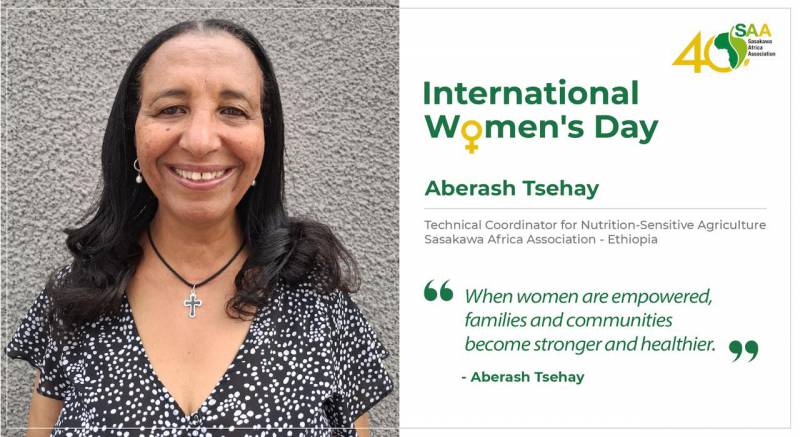
As we celebrate International Women’s Day, we are proud to feature Aberash Tsehay, Technical Coordinator for Nutrition-Sensitive Agriculture at Sasakawa Africa Association’s Ethiopia Office. Over the years, Aberash has played a pivotal role in strengthening agro-processing enterprises, building thriving women’s groups, advancing postharvest innovations, and improving nutrition for families and communities.
Her journey reflects dedicated leadership, strong community partnerships, and a deep belief that empowering women is essential to build stronger, healthier, and more resilient communities.
Below, Aberash shares her story, lessons learned, and the perspectives that continue to guide her work.
Q. Tell us a bit about your background - what inspired you to pursue work in agriculture and nutrition, and how has your journey evolved over the years?
I was born and raised in Fisha Genet, a rural town in Southern Ethiopia. From a young age, I witnessed the challenges rural families, especially women, face in securing food and nutrition. These early experiences shaped my lifelong commitment to agriculture and proper nutrition.
After obtaining a diploma in Home Science and Technology, I began my career working closely with rural women as a Home Agent. I provided training in nutrition, home management, and food production, and encouraged women to take part in income-generating activities. While raising two children and balancing work and family responsibilities, I furthered my education in Sociology and Social Administration, often traveling long distances from my remote home to attend classes. My family’s support and my determination helped me overcome these challenges.
Building on this foundation, I took on a leadership role focused on empowering women and challenging harmful traditions in rural communities. Though it meant being away from my family in Addis Ababa, I was driven by the desire to create lasting change and open new possibilities for women and girls.
A scholarship to study management and development in the Netherlands further broadened my understanding of gender and rural livelihoods. After returning home, I remained deeply committed to advancing women’s empowerment and helping families build brighter futures.
Today, my work at Sasakawa Africa Association centers on nutrition-sensitive agriculture, advancing postharvest technologies, and supporting women in building small agro-businesses and stronger households. I take great pride in seeing women become leaders within their communities and families, and I continue to be inspired by their resilience and determination.
Q. Over the years, what has kept you motivated and engaged in this work - especially as you’ve seen women and communities grow alongside your programs?
Seeing tangible, lasting change in the lives of women, their families, and communities has always motivated me. As women achieve economic growth, their children gain better access to education, their homes improve, and families enjoy more nutritious food.
Another source of motivation has been the widespread adoption of improved postharvest technologies, such as threshers, shellers, and hermetic storage. These innovations reduce postharvest losses and significantly ease women’s workload, improving productivity, efficiency, and overall quality of life.
Q. Can you share a defining moment from your work with women’s groups that reaffirmed the importance of investing in women’s leadership and economic empowerment?
Case: The Success of Alen Tesfa Agro-processing Group
Through my work with women’s agro-processing groups, I have witnessed remarkable progress, particularly with the Alen Tesfa Agro-processing Group. In 2010, 37 women in Enebi Chifar Kebele, Amhara Region, came together to form the group. The name “Alen Tesfa” meaning “We have hope” in Amharic, reflects their collective aspiration and determination.
With continuous capacity-building support, the group launched an agro-processing business in 2012, constructing a mill house and shop with their own resources, along with support from the local government. Although securing land and other support was initially challenging, gender awareness training helped shift community attitudes, and husbands and local leaders began championing the women’s efforts.
Today, the group produces and sells value-added cereals, pulses, and spices, while also providing milling services to the local community. Despite the common challenges of running a collective enterprise, Alen Tesfa stands out for its strong cohesion and growth, recently expanding with a new shop and storage facility. Many members have developed strong business and financial management skills, and several have gone on to establish their own businesses while learning to save and manage resources more effectively.
What has impressed me most has been the remarkable growth in women’s confidence and leadership. Many who were once hesitant now speak confidently in public meetings, share their experiences, and take on leadership roles within the community. One particularly powerful moment was when a member delivered an inspiring televised presentation at the Japanese Embassy in Addis Ababa, stepping in at short notice and exceeding all expectations.
As women’s economic contributions became more visible, household gender relations improved, with greater mutual understanding and more conflicts resolved through dialogue. Seeing this shift from economic participation to leadership and healthier family dynamics, reaffirmed for me that investing in women’s empowerment brings lasting, transformative change to families and communities.
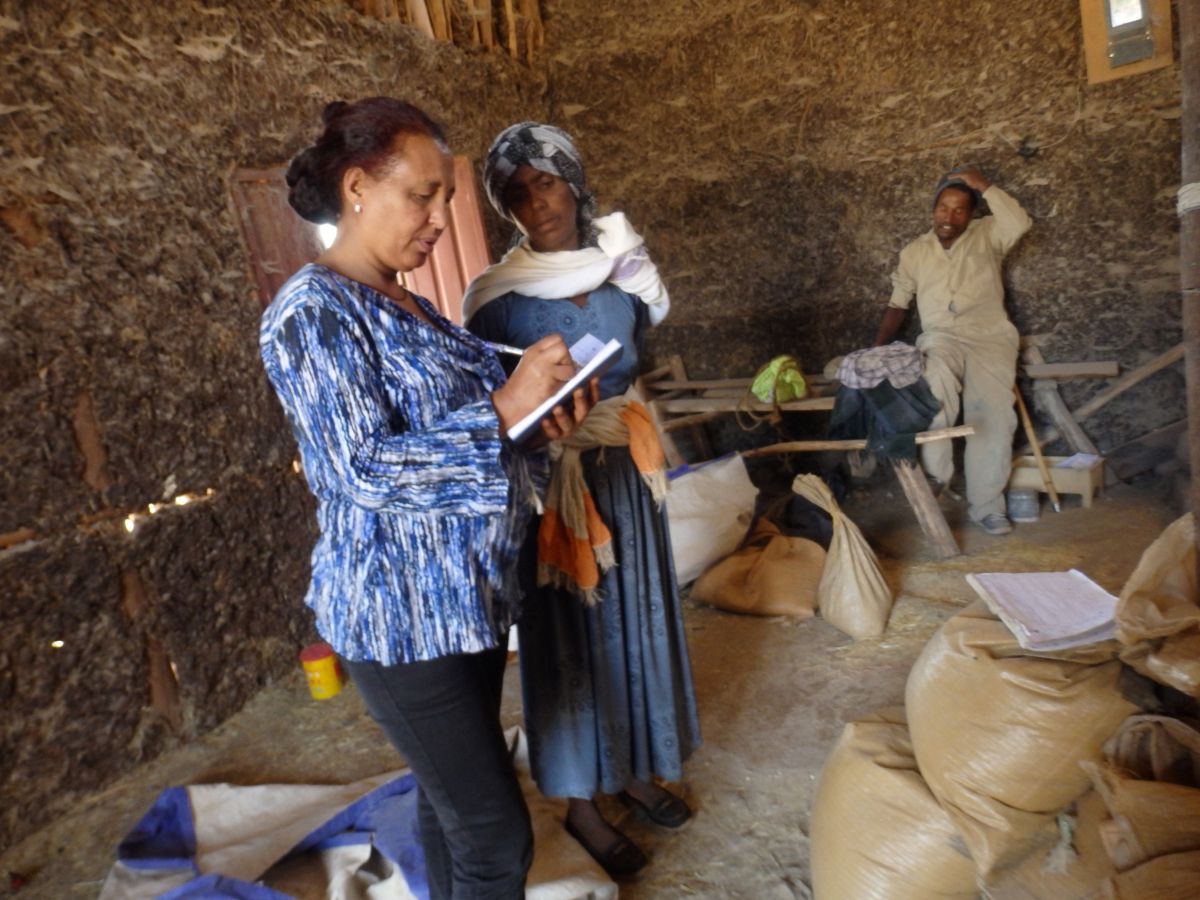
Monitoring visit to Alen Tesfa mill house and discussion with the group chair
Q. You’ve supported the introduction of postharvest machinery and agro-processing enterprises. How have these innovations shifted women’s roles in their communities?
Harvest season in rural communities has traditionally been the busiest and most physically demanding time for women. In addition to their household responsibilities, women have managed nearly every stage of the harvest from gathering crops and transporting heavy loads to cleaning grain and managing storage, often using basic, labor-intensive tools.
The introduction of improved postharvest technologies, such as threshers, shellers, and hermetic storage, has significantly reduced these burdens. Crops can now be processed directly in the field, minimizing manual labor and eliminating repeated handling. Improved storage technologies also prevent losses from pests and reduce the constant task of monitoring and reprocessing grain.
With more time and energy available, women are increasingly engaging in income-generating activities and community initiatives. Reliable storage has ensured families have access to quality grain year-round, strengthening women’s roles in safeguarding household food security. These innovations have elevated women from behind-the-scenes laborers to recognized economic actors and community leaders.
Q. From your perspective, why is it critical for women to not just participate in agriculture - but to lead and innovate within these systems?
Women make up a significant share of the agricultural labor force, while also carrying primary responsibility for childcare, household management, and family nutrition. Since women are directly responsible for feeding their families, they possess deep, practical knowledge about what to produce, when to produce it, and in what quantities. For this reason, their role in agriculture should extend beyond simple participation.
When women lead and innovate, agricultural systems become more nutrition-responsive, and production decisions align more closely with household food security, dietary diversity, and sustainable resource management. Ultimately, this contributes to the development of a healthier generation.
Q. As a long-serving team member, how has SAA supported your growth and amplified your impact over time?
SAA has been like a university to me, providing invaluable practical knowledge in postharvest management. Working here has allowed me to collaborate with partners across the country and engage with diverse stakeholders. This experience has strengthened both my technical expertise and leadership skills. This support has enabled me to expand my impact in empowering rural women, improving nutrition, and building resilient postharvest systems.
Q. As we celebrate International Women’s Day, what message would you share with young women aspiring to build meaningful and impactful careers?
Success is rooted in strength and resilience. Challenges are inevitable, but you must never give up. With persistence, commitment, and self-belief, you can build a meaningful and impactful career.
【LinkedIn】Happy International Women's Day
SAA Publications
E-newsletter
"Walking with the Farmer"
SAA publishes a bimonthly e-newsletter reporting on SAA activities.
SAA Mail News
Sign up to receive our e-newsletter and upcoming event information via email.

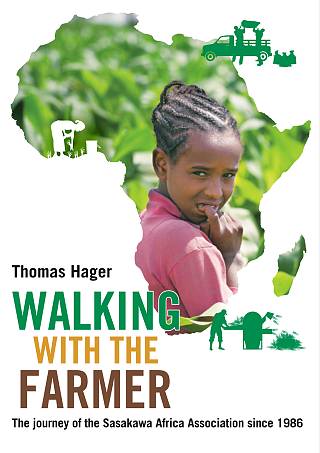
SAA history book
"Walking with the Farmer: The journey of the Sasakawa Africa Assoication since 1986"
This book chronicles the history of SAA from its inception to the present.
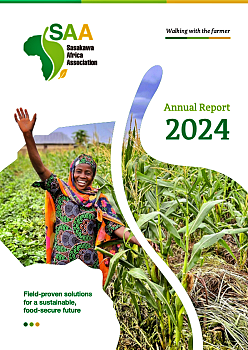
Annual Report
Annual Report FY2024
Annual Report FY2024 is available here.


