【Activity】KSADP Empowers 157 Beneficiaries to Boost Rice Value Addition in Kano
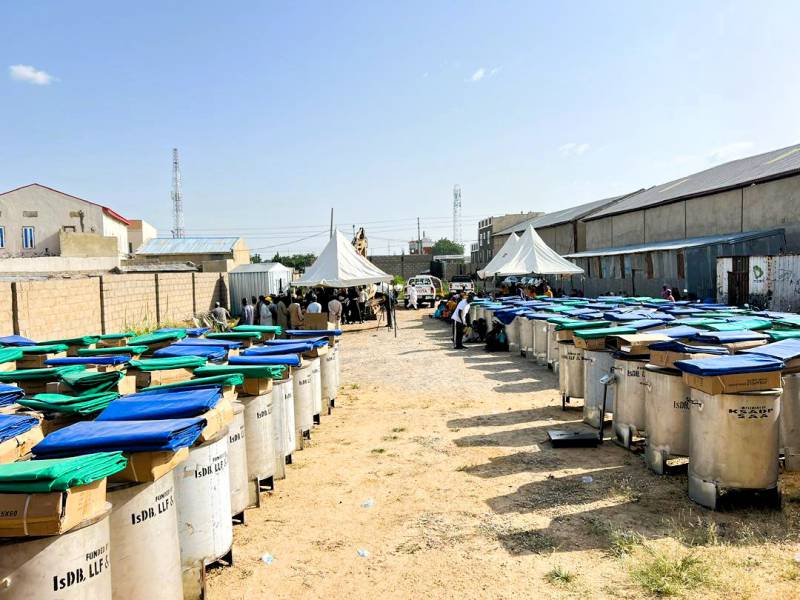
The Kano State Agropastoral Development Project (KSADP), funded by the Islamic Development Bank (IsDB) and the Lives and Livelihood Funds (LLF), has taken a major step in strengthening value addition along the rice value chain. A total of 157 beneficiaries from all 44 Local Government Areas received empowerment packages designed to boost their incomes and improve food security.
The beneficiaries were previously trained by the Nutrition-sensitive agriculture (NSA) pillar of the Sasakawa Africa Association (SAA) to improve their knowledge and skills in rice processing, storage, and food quality management.
The empowerment phase provided each trained participant with essential post-harvest processing equipment, including parboilers, tarpaulins, weighing scales, and parboiling pots. The support aims to help processors enhance food safety, reduce waste, and improve profitability.
Speaking during the distribution exercise in Kano, SAA Country Director Dr Godwin Atser said the intervention reflects SAA’s broader goal of improving nutrition and livelihoods through a food-based approach that supports the cultivation and processing of nutrient-rich and biofortified crops.
“We are not just providing equipment; we are providing opportunities for smallholder farmers, especially women and youth, to add more value to what they produce,” Dr Atser said. “By equipping the beneficiaries with the right skills and facilities, we are helping to strengthen food systems, reduce post-harvest losses, and ensure families in rural communities have access to safer and more nutritious food.”
Represented by Abdulrashid Hamisu Kofarmata, KSADP/SAA Project Coordinator, Dr Atser noted that this phase of the project, which focuses on value addition and mechanization, is part of a wider empowerment plan targeting over 3,000 direct beneficiaries across the state. He further explained that the KSADP crop component implemented by SAA has already reached over 477,000 farmers directly with various forms of support.
Also speaking at the event, Mallam Ibrahim Garba Gama, the State Project Coordinator of KSADP, emphasized the significance of the exercise in advancing the government’s agricultural transformation agenda.
“This intervention reinforces our commitment to building a more productive and inclusive rice value chain in Kano,” Gama stated. “By empowering smallholder farmers with practical tools and knowledge, we are laying the foundation for sustainable agribusinesses that will boost rural incomes and create jobs, especially for women and young people.”
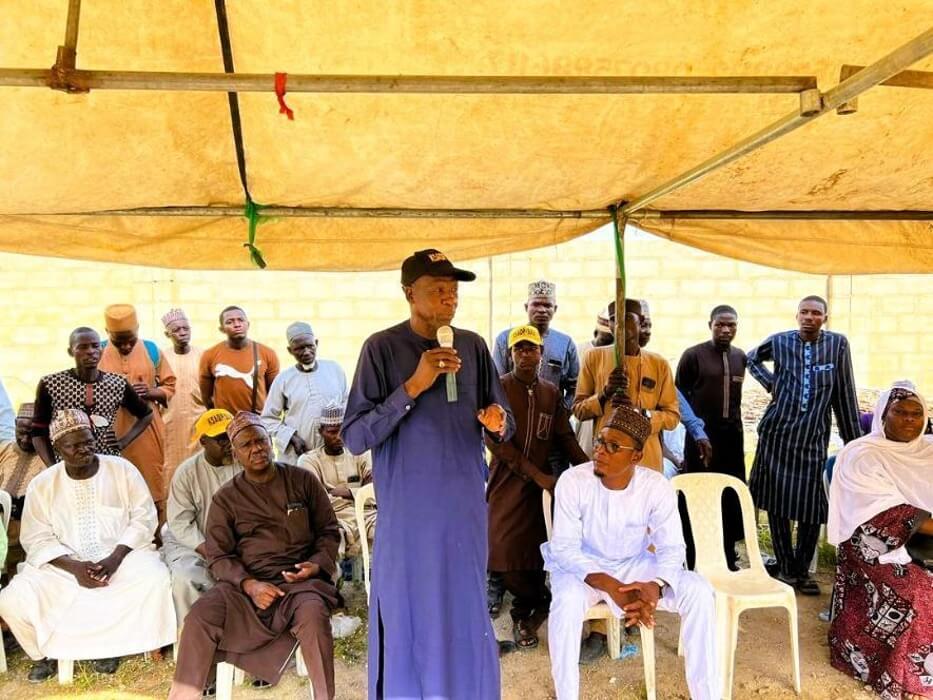 Ibrahim Garba Gama, KSADP State Project Coordinator, addressing the beneficiaries during the event.
For many of the beneficiaries, the support marks a turning point in their agribusiness journey. Aisha Mohammed, a rice processor from Warawa Local Government Area, expressed gratitude for the gesture, noting that the equipment will help her expand her small enterprise and improve product quality.
“Before now, I was limited by poor processing facilities,” Aisha said. “With this parboiling and drying equipment, I can now produce better-quality rice, reduce waste, and serve more customers.”
The event was attended by Abdullahi Rabba, KSADP Crops Specialist, lead extension workers, project beneficiaries, and members of the KSADP/SAA project teams, who described the exercise as a model for promoting inclusive agricultural growth and food system resilience in Kano State.
SAA Publications
E-newsletter
"Walking with the Farmer"
SAA publishes a bimonthly e-newsletter reporting on SAA activities.
SAA Mail News
Sign up to receive our e-newsletter and upcoming event information via email.

SAA history book
"Walking with the Farmer: The journey of the Sasakawa Africa Assoication since 1986"
This book chronicles the history of SAA from its inception to the present.
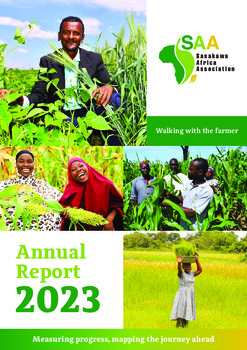
Annual Report
Annual Report FY2023
Annual Report FY2023 is available here.


