【Farmers' story】From Savings to Seed Shops: Empowering Women to Lead Last-Mile Agribusiness in Northern Uganda
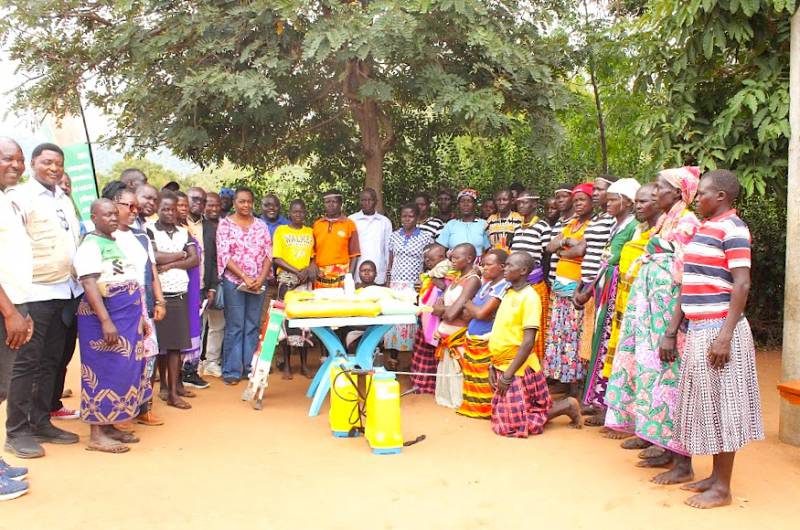
Across the drylands of Karamoja, agricultural livelihoods are shaped by distances to markets, climate stress, and limited access to basic services. For women farmers in particular, unreliable input supply systems have long constrained productivity, food security, and income diversification. In such contexts, strengthening last-mile agribusiness systems, rather than delivering short-term input support, is critical for building resilience and sustaining rural livelihoods. The experience of the Lokosimalitit Women’s Group in Karenga District illustrates how women-led institutions can drive this transformation when supported through integrated, market-oriented approaches.
From Savings Groups to Agribusiness Leader
Formed in 2020 in Lokosimaritit village, Nawoyagum Parish, the group began as a Village Savings and Loan Association (VSLA), bringing together 30 women and one male associate member. While savings improved short-term access to cash, members soon identified a deeper structural challenge: farmers lacked timely access to quality seeds and post-harvest management materials. Women regularly travelled more than 30 kilometers to Karenga town to purchase agricultural inputs. This meant high transport costs, delayed planting, and exposure to poor-quality or counterfeit products, all contributing to low yields and persistent vulnerability. With targeted support from the World Food Programme (WFP) and the Sasakawa Africa Association (SAA), the group shifted from being beneficiaries to service providers within the local agricultural ecosystem. Rather than distributing inputs directly, the intervention focused on institutional strengthening, business mentoring, and market integration.
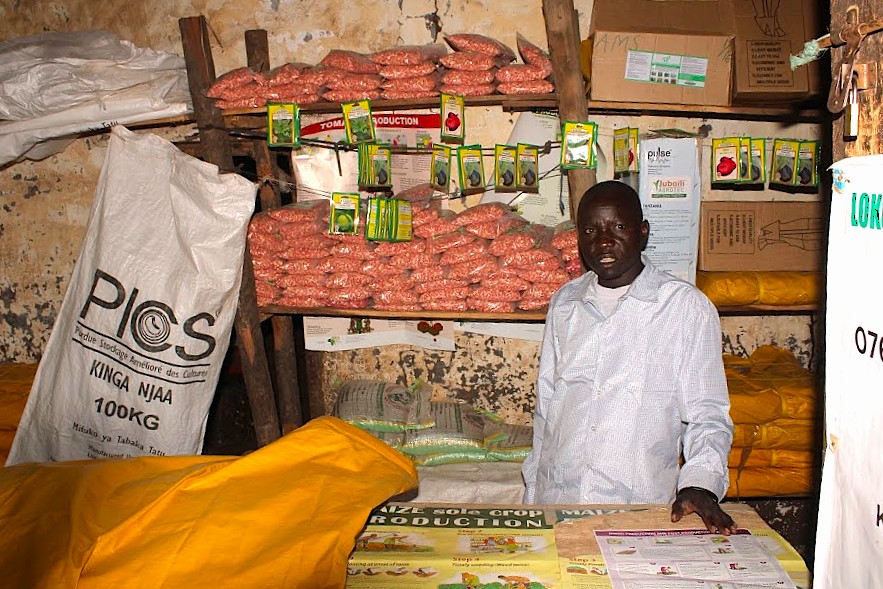 The only male associate member of the Lokosimalitit Women’s Group, serving as the agro-input shop attendant and supporting day-to-day operations.
Establishing the First Agro-Input Shop in Kawalakol
A major milestone was the establishment of the first agro-input shop in Kawalakol Sub-County a strategic investment that addressed a systemic gap in the local value chain. The shop stocks improved seeds and post-harvest management materials such as hermetic storage bags and tarpaulins, bringing essential services closer to farmers and reducing dependency on distant markets. Between June and August 2025, the enterprise recorded USD 1,710 in sales, serving 96 farmers, the majority of whom were non-members. The shop created employment for a youth attendant and operates on a commission-based model with margins ranging from 18 to 35 percent, ensuring commercial viability while keeping products affordable. Profits are reinvested into the VSLA, strengthening women’s access to credit and enabling household investments.
Building Resilience and Expanding Impact
Beyond income generation, the enterprise has contributed to broader resilience outcomes. Some members have begun ensuring their gardens, reflecting growing confidence in adopting financial risk-management tools in a drought-prone environment. The group has also established linkages with eight Commercial Community-Based Facilitators (CCBFs), further strengthening demand and embedding the shop within local extension and advisory systems.
Challenges and Opportunities Ahead
Challenges remain. Limited working capital constrains product diversification, regulatory requirements limit agrochemical storage, and the transition from subsidized to market-based pricing requires continued community engagement. Yet the opportunity is substantial. As the only agro-input outlet in Kawalakol, the Lokosimalitit enterprise is well positioned to scale into a fully-fledged rural agro-dealer serving hundreds of farmers each season. Beyond economic gains, the initiative is reshaping social dynamics. Women report increased confidence, stronger decision-making power within households, and improved capacity to invest in food, education, healthcare, and land. The experience highlights the central role of women in sustaining local food systems.
A Model for Long-Term Rural Transformation
The Lokosimalitit story reinforces a key lesson: lasting impact emerges when technical solutions are combined with institutional strengthening, market access, and local ownership. In Karamoja, women-led agribusiness is proving to be not only a pathway to income, but a foundation for resilience, dignity, and long-term rural transformation.
 SAA and WFP hosting a learning visit for the Mastercard Foundation to the Lokosimalitit Women’s Group, showcasing the impact of agribusiness interventions under the AMS Project.
SAA Publications
E-newsletter
"Walking with the Farmer"
SAA publishes a bimonthly e-newsletter reporting on SAA activities.
SAA Mail News
Sign up to receive our e-newsletter and upcoming event information via email.

SAA history book
"Walking with the Farmer: The journey of the Sasakawa Africa Assoication since 1986"
This book chronicles the history of SAA from its inception to the present.
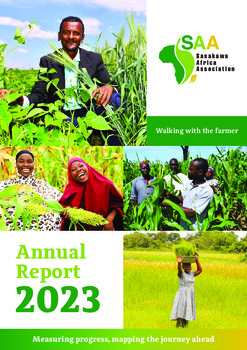
Annual Report
Annual Report FY2023
Annual Report FY2023 is available here.


