【Staff Spotlight】A Legacy of Innovation and Service: Celebrating the Career of Oumer Taha Abdulwehab
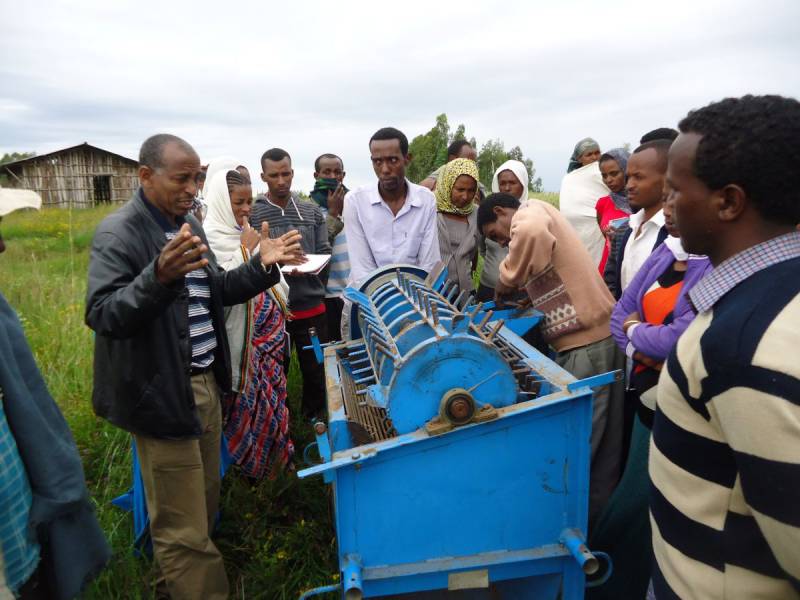
After more than three decades of service in Ethiopia’s agricultural sector, including 16 years with the Sasakawa Africa Association (SAA), Mr. Oumer Taha Abdulwehab retired on March 24, 2026, leaving behind a remarkable legacy in postharvest management and agricultural mechanization.
Oumer’s professional journey began in 1987, following his graduation from Alemaya University of Agriculture. He started his career with the Ministry of Agriculture, working at zonal and regional levels to promote small-scale agricultural technologies for smallholder farmers. His early experience at the Asella Rural Technology Promotion Center laid a strong foundation for his lifelong commitment to improving farmers’ livelihoods.
In 1996, he joined the Oromia Bureau of Agriculture as a Senior Expert, and later pursued a Master’s Degree in Agricultural Engineering (Postharvest Technology) from Haramaya University. After completing his studies, he continued his work in agricultural mechanization research, eventually becoming a Research Process Director at the Oromia Agricultural Research Institute.
In April 2010, Oumer joined SAA as a Program Officer for Postharvest and Agro-processing, later advancing to Senior Program Officer. Over the years, he played a central role in promoting and scaling technologies that have significantly reduced postharvest losses and improved farmer incomes. When he first joined, the promotion of improved postharvest threshing machines was limited to only a few woredas. Over the past sixteen years, Oumer played a central role in scaling these technologies across the country, significantly reducing postharvest losses and improving farmer incomes.
Driving Innovation in Postharvest Technologies
Throughout his career, Oumer remained deeply motivated by one key challenge: the significant losses farmers face after harvest. His work focused on practical solutions that could make an immediate difference in farmers’ lives. Among his many contributions, he is particularly proud of his work in improving the multi-crop thresher, especially enhancing its sieve mechanism. This innovation greatly increased its efficiency and adoption across multiple regions.
Under his leadership and collaboration with partners, technologies such as the SG2000 multi-crop thresher, Bako Model II maize sheller, and PICS hermetic storage bags were successfully scaled across Ethiopia. These interventions have liberated countless farming communities—particularly in tef-growing areas of southeastern Oromia—from the grueling traditional method of threshing by animal trampling.
These innovations have had a profound impact:
- Minimizing storage losses to near zero
- Improving grain quality and market value
- Reducing labor for farmers and households
As a result, thousands of farmers have benefited from increased incomes, improved food security, and more efficient farming practices.
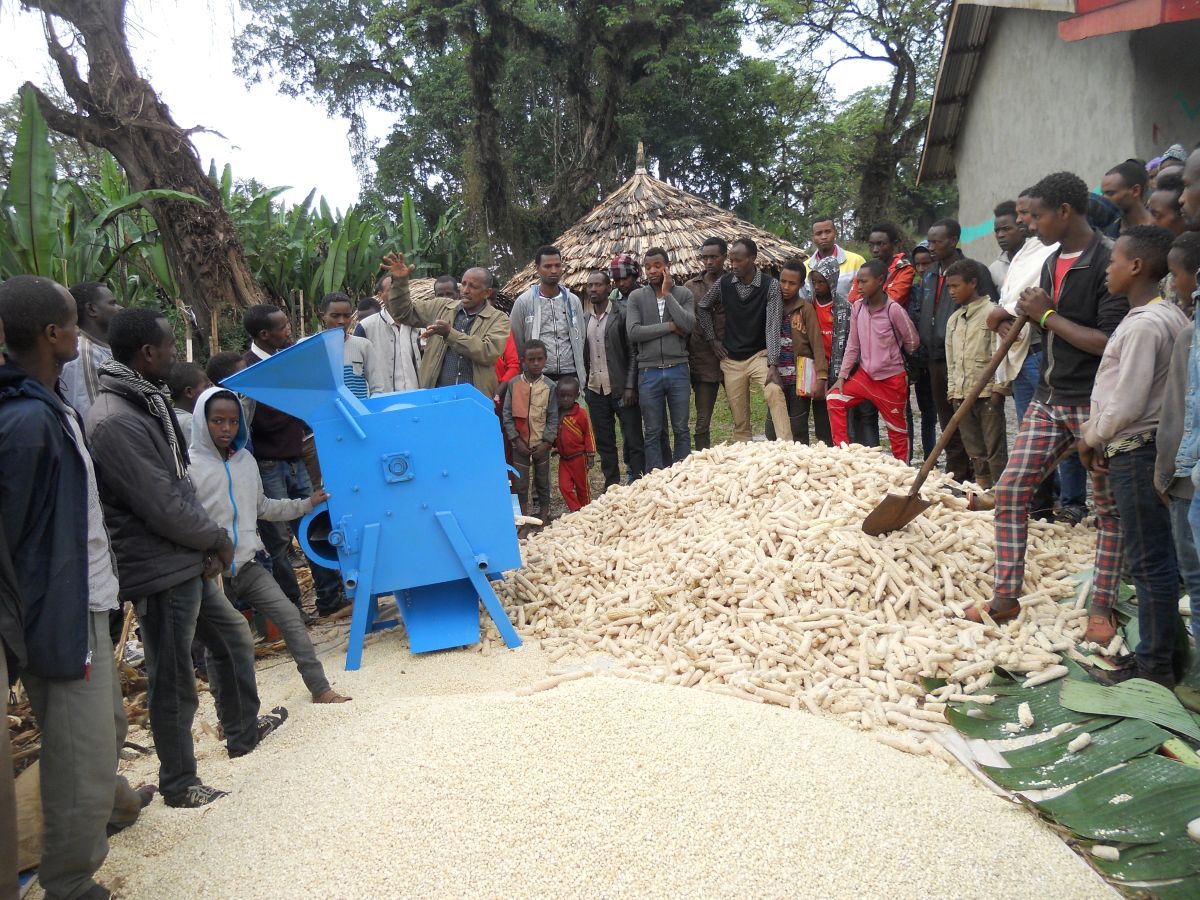
Explaining the importance of Maize sheller to farming communities -Anna Sorra woreda
The Power of Partnerships and Farmer-Centered Solutions
Oumer attributes much of this success to strong partnerships and collaboration. His work with institutions such as the Ministry of Agriculture, research organizations, Purdue University, and private sector partners helped create a sustainable ecosystem for technology adoption.
A key element of this ecosystem was the empowerment of youth group service providers. In Dembecha woreda alone, approximately 170 maize shellers are now owned and operated by private youth entrepreneurs who deliver services on a hire basis, creating sustainable livelihoods while modernizing the sector.
One particularly impactful collaboration was with Purdue University in promoting hermetic storage technologies. Through demonstrations and continuous engagement, farmers gained confidence in using PICS bags, leading to widespread adoption across major maize- and bean-producing regions. Today, local production has scaled to 4 million bags annually, with the technology’s impact reaching beyond Ethiopia into neighboring countries like South Sudan and Somaliland.
A key lesson from his experience is the importance of trust, collaboration, and delivering real results. By working closely with farmers and involving them in problem-solving, Oumer ensured that technologies were practical, relevant, and widely accepted.
Mentorship, Leadership, and Lasting Influence
Beyond his technical contributions, Oumer is widely recognized as a mentor and supportive colleague. He has guided younger professionals with patience, encouraging teamwork and knowledge sharing.
His advice to the next generation is simple but powerful:
“Never give up on the agricultural sector. It holds immense potential to transform livelihoods. Your dedication and innovation can drive meaningful change.”
His leadership style reflects a deep commitment not only to professional excellence but also to building the capacity of others.
Lessons from the Field
Working closely with farmers shaped Oumer’s approach throughout his career. He emphasizes the importance of listening to farmers and valuing their knowledge.
One example is the improvement of the multi-crop thresher. By incorporating farmer feedback and working with local partners, a simple modification significantly improved efficiency and accelerated adoption across regions.
For Oumer, this experience reinforced a fundamental principle: “Lasting change comes from working with farmers, not just for them.”
A Life of Balance, Service, and Purpose
Alongside his professional achievements, Oumer takes great pride in his role as a husband and father. Despite the demands of his work, he remained committed to his family, whose support enabled his long and impactful career. He reflects that balance is not about dividing time equally, but about commitment, presence, and shared values.
Looking Ahead: A New Chapter
As he enters retirement, Oumer looks forward to focusing on his health, spending more time with his family, and continuing to share his expertise when needed. He also hopes to remain engaged in agriculture, if opportunities allow. For him, this new chapter represents both a time for rest and a continuation of his lifelong commitment to serving others.
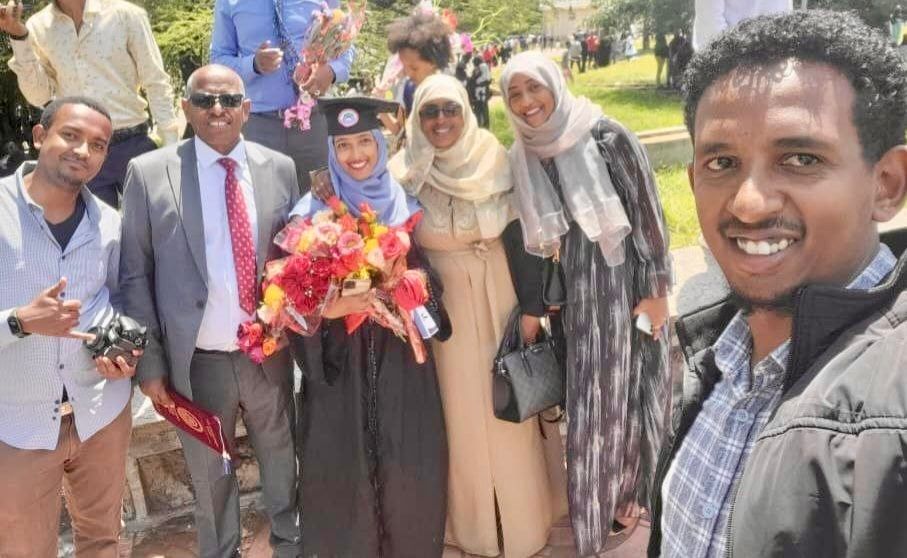
Oumer's phptp with his family
A Lasting Legacy
Oumer hopes to be remembered for his contributions to advancing postharvest technologies and improving the livelihoods of smallholder farmers. His work has left a lasting impact—not only through the technologies he helped scale, but also through the people he mentored and the partnerships he built.
In his final message to colleagues, he shared:
“It has been a privilege to work with all of you. Stay committed to farmers, value their knowledge, and continue working together. Your efforts truly make a difference.”
SAA Publications
E-newsletter
"Walking with the Farmer"
SAA publishes a bimonthly e-newsletter reporting on SAA activities.
SAA Mail News
Sign up to receive our e-newsletter and upcoming event information via email.

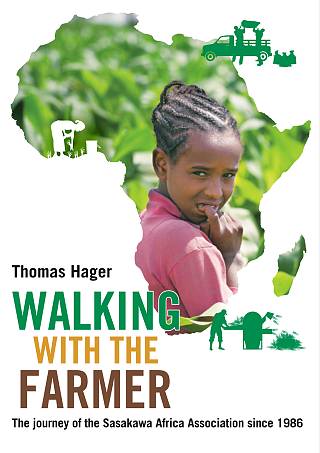
SAA history book
"Walking with the Farmer: The journey of the Sasakawa Africa Assoication since 1986"
This book chronicles the history of SAA from its inception to the present.
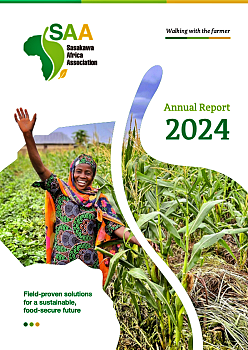
Annual Report
Annual Report FY2024
Annual Report FY2024 is available here.


