Nourishing a Generation: Fortified Whole Grains for School Feeding in Karamoja
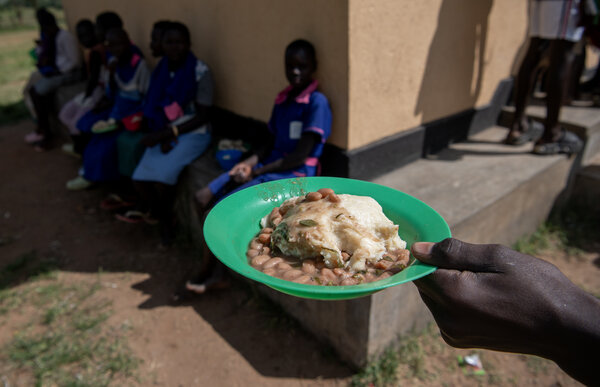
Transforming Education: Whole Grains as Fuel for Learning
The Fortified Whole Grain Initiative funded by Novo Nordisk Foundation and implemented by SAA, in collaboration with World Food Program, Global Alliance for Improved Nutrition (GAIN), and Makerere University department of Food Technology & Nutrition, aims to transform school meals in Karamoja into a powerful engine for improved nutrition, stronger local food systems, and resilient rural livelihoods. The vision is that every child attending school in Karamoja will have consistent access to nutritious meals prepared from fortified whole grains grown by local farmers. These meals will not only address hunger but also significantly reduce micronutrient deficiencies that affect children’s health and learning capacity. With improved nutrition, children are better able to concentrate, participate actively in class, and achieve improved learning outcomes. Stronger immune systems and healthier growth will further support their development during critical early years.
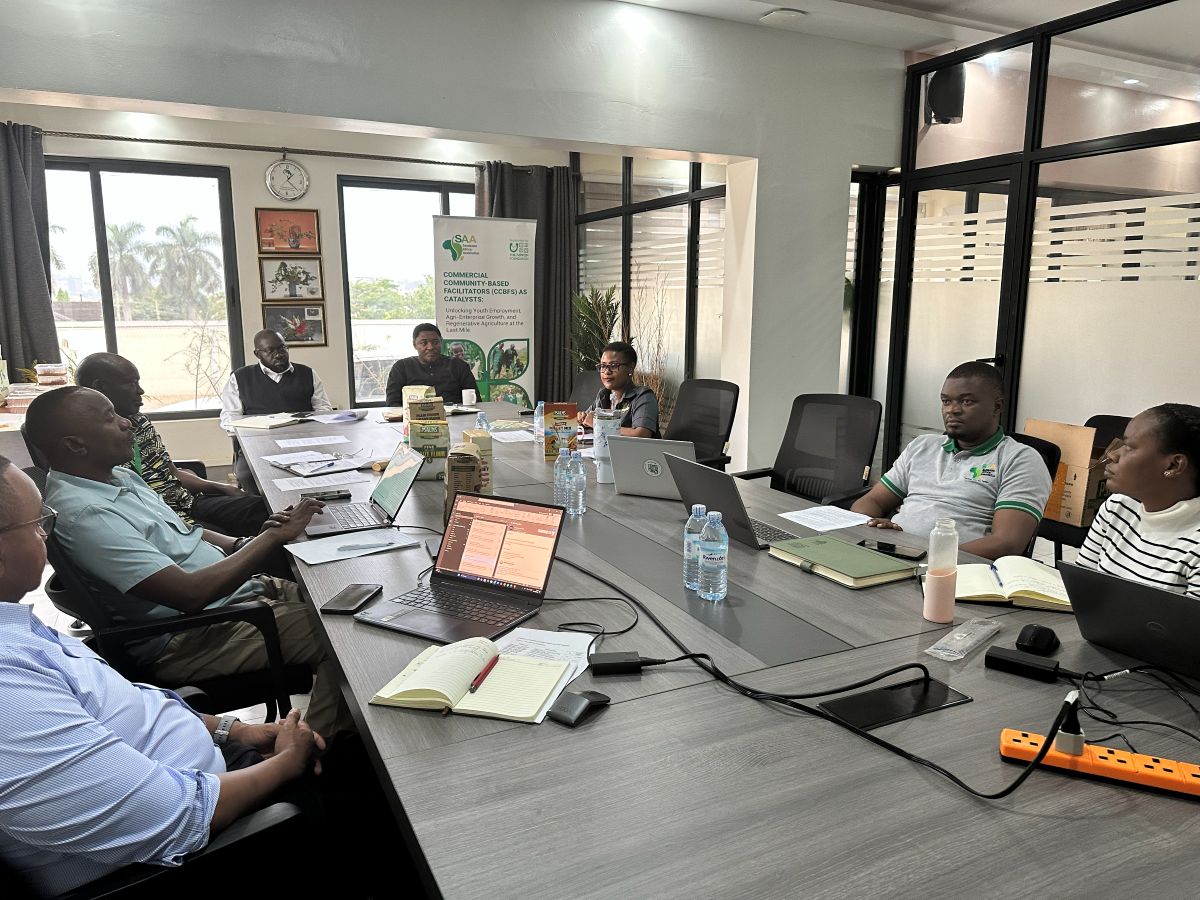
SAA and Fortified Whole Grain Alliance teams discuss project implementation activities for alignment.
Empowering Local Farmers and Local Food Systems
At the same time, three-year initiative seeks to strengthen the local agricultural economy by creating reliable markets for climate-resilient whole grains such as sorghum, millet, maize, and legumes. Smallholder farmers, organized through cooperatives and farmer groups, will supply grains directly to school feeding programs, ensuring stable incomes while encouraging increased production of nutritious and drought-tolerant crops suited to Karamoja’s challenging climate.
Local millers and food processors will also play a central role producing fortified whole grain flours that meet national quality standards. This will contribute to the development of a sustainable local food processing sector capable of supplying schools, communities, and wider markets.
Schools will also serve as a platform for nutrition education and behavioral change. Through school gardens, nutrition clubs, and community engagement, children will learn about healthy diets and the importance of traditional whole grains. These lessons will extend beyond the classroom, influencing household food choices and strengthening demand for nutritious foods.
A Model for Sustainable Food Systems
Ultimately, success will be measured not only by the number of meals served, but also by the transformation of the local food system. School feeding programs will shift from reliance on external food aid to a locally driven, nutrition-sensitive model where farmers, schools, millers, and communities work together to nourish the next generation.
In this vision, Karamoja becomes a model for how school-feeding programs can simultaneously improve child nutrition, stimulate rural economies, and promote climate-resilient agriculture. What begins as a fortified whole grain meal in school has the potential to evolve into a sustainable system that supports healthier children, stronger communities, and a more resilient food future.
SAA Publications
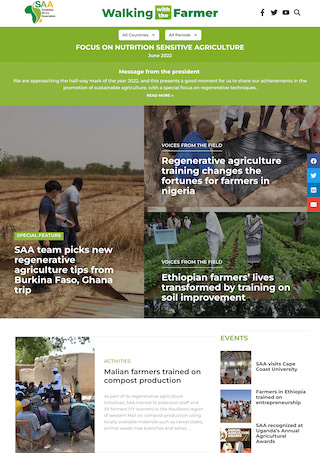
E-newsletter
"Walking with the Farmer"
SAA publishes a bimonthly e-newsletter reporting on SAA activities.
SAA Mail News
Sign up to receive our e-newsletter and upcoming event information via email.

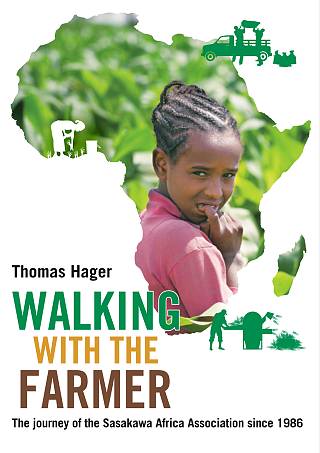
SAA history book
"Walking with the Farmer: The journey of the Sasakawa Africa Assoication since 1986"
This book chronicles the history of SAA from its inception to the present.
Annual Report
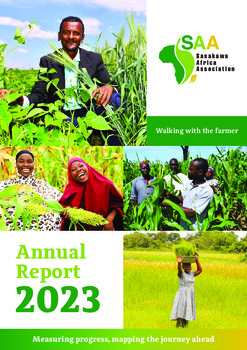
Annual Report FY2023
Annual Report FY2023 is available here.


