From Chemicals to Nature: Mali Farmers Turn to Biopesticides for Safer, Sustainable Production
SAA’s Strategic Approach: IPM and Capacity Building
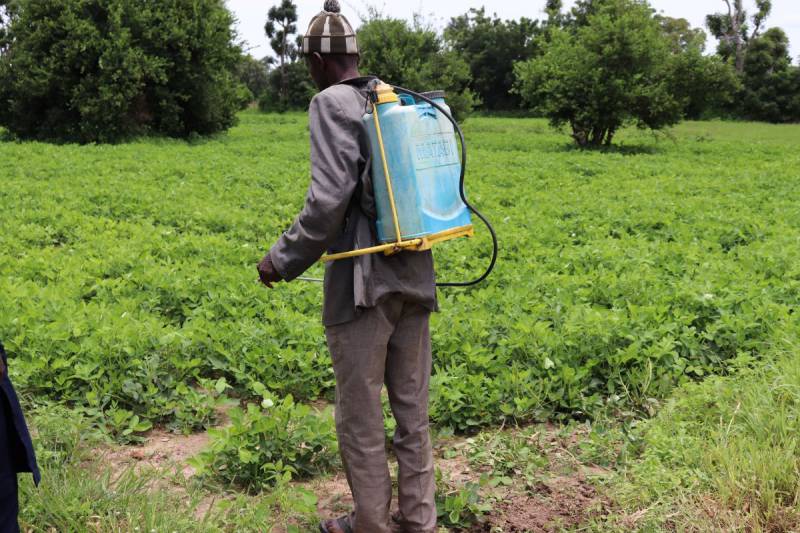
As part of our Climate Resilient and Sustainable Agrifood Systems (CRAS) technology, SAA promotes Integrated Pest Management (IPM). In Mali, SAA trains extension agents and community facilitators through a cascade Training of Trainers (ToT) approach, equipping them with practical techniques to teach farmers to monitor pest populations, integrate cultural control methods, and use safer alternatives for intervention.
However, even when farmers learn to use chemical pesticides properly, the purchase cost often remains a heavy financial burden. Consequently, there is growing interest in plant-based biopesticides prepared from locally available materials.
Following this specialized training, these extension agents introduced farmers across ten villages to the preparation and use of biopesticides as a sustainable pest management solution.
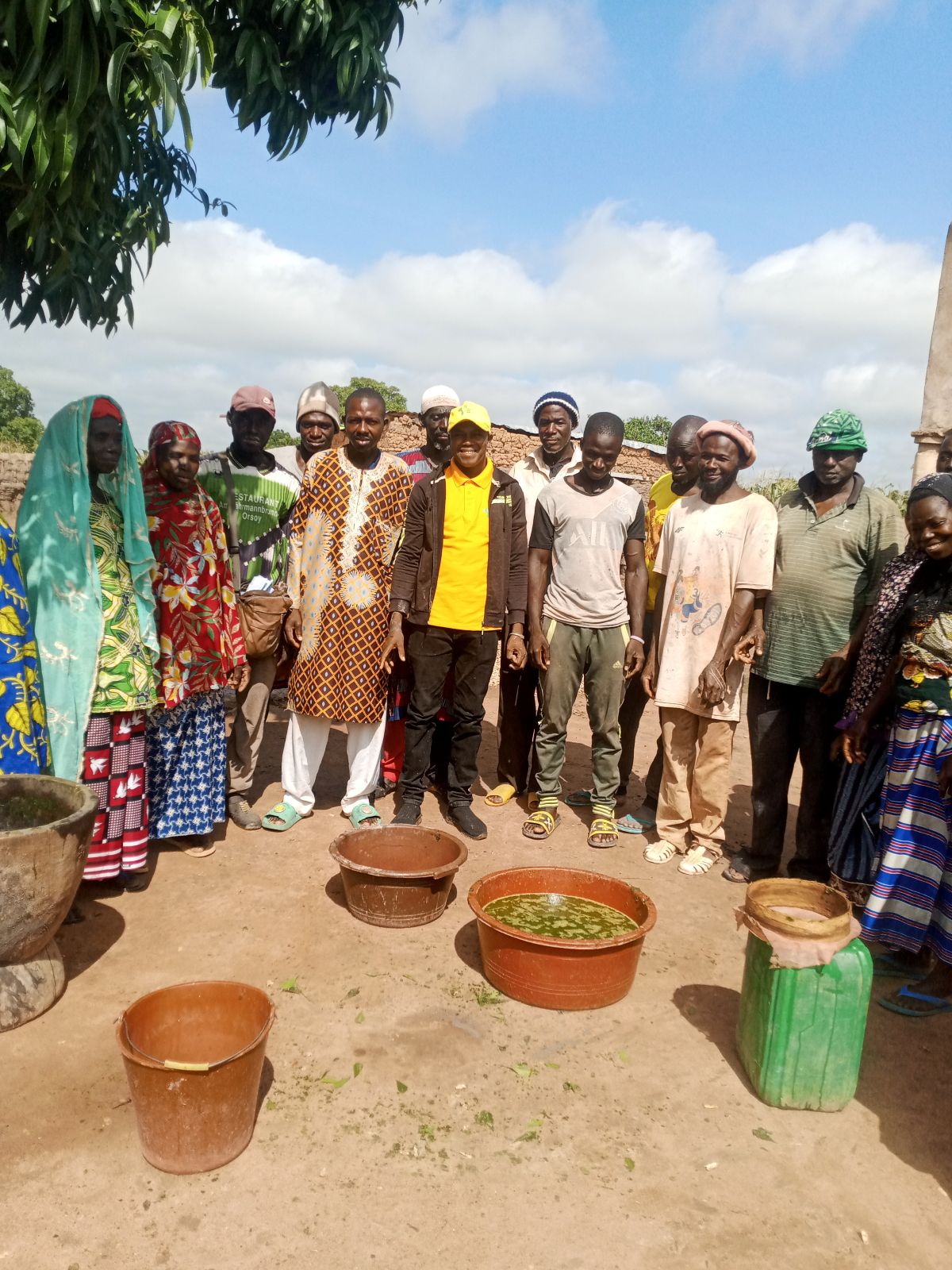
Group photo of farmers and CAT members in Koloniboundio after a practical training session on biopesticide preparation.
Rapid Adoption and Economic Relief in the Fields
Beyond the training itself, the most significant change has been the rapid adoption and practical results seen in farmers’ fields. Farmers report that locally prepared biopesticides are effective against pests in maize, sorghum, and vegetable fields. Kassim Kon explained that repeated purchases of chemical pesticides had previously represented a heavy financial burden during the cropping season. By adopting locally prepared pesticides, farmers have reduced production costs while improving crop protection.
Empowering Women Producers and Enhancing Community Health
Women farmers have particularly well received the approach. Of the approximately 265 producers who have adopted or tested the technology, 154 are women. Participants noted that the ingredients are locally available and that preparation methods are simple and affordable.
Many farmers also reported reduced exposure to chemical pesticides, contributing to safer working conditions and improved health. Successful field demonstrations further boosted confidence in the technology, encouraging its wider adoption across the 10 participating communities.

The CAT of Koloniboundio demonstrates the preparation and application of biopesticides to promote safer and more sustainable practices.
Driving Long-Term Food Security and Resilience
According to a village-level leader, the adoption of biopesticides has enhanced food security by protecting harvests while reducing reliance on costly external inputs. Farmers are now more willing to integrate these practices into their routine crop management strategies.
This experience demonstrates how locally available resources, combined with practical training and community-based learning, can support sustainable pest management. By reducing costs, safeguarding health, and improving crop protection, biopesticides are helping farmers build more resilient and sustainable production systems.
SAA Publications
E-newsletter
"Walking with the Farmer"
SAA publishes a bimonthly e-newsletter reporting on SAA activities.
SAA Mail News
Sign up to receive our e-newsletter and upcoming event information via email.


SAA history book
"Walking with the Farmer: The journey of the Sasakawa Africa Assoication since 1986"
This book chronicles the history of SAA from its inception to the present.
Annual Report
Annual Report FY2024
Annual Report FY2024 is available here.


