Nourishing Families Through Innovation: Women in Tiola Learn to Enhance Traditional Foods for Healthier Households
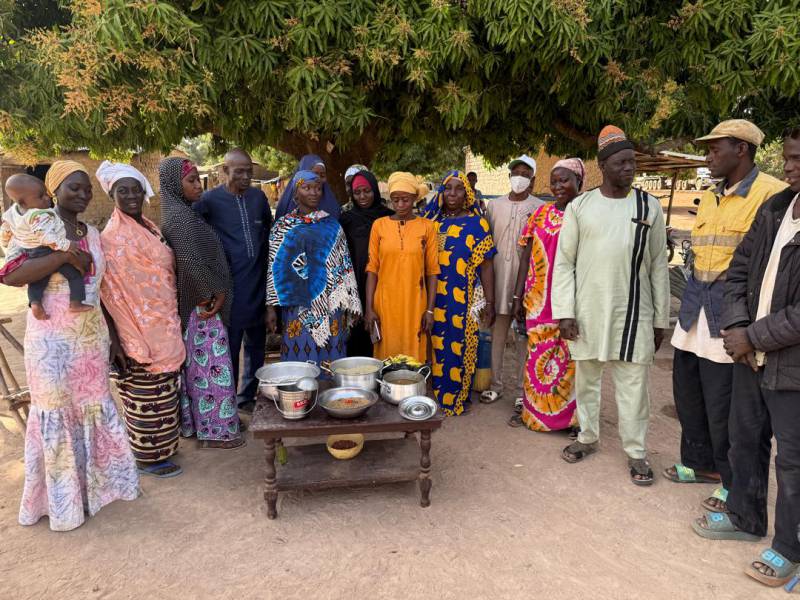
In Tiola, traditional sorghum is much more than a staple crop. It is part of the community’s culture and identity. For generations, women have prepared sorghum-based dishes using recipes and techniques passed down within families. While these meals are cherished for their taste and cultural value, their nutritional potential has not often been fully utilized. In Tiola, food is not only about filling the stomach; it is closely linked to health and long life.
To unlock this potential, the Sasakawa Africa Association (SAA) Mali, through its Community-Based Facilitator (CBF) Simba Sangare, recently organized a hands-on demonstration session. Women processors, farmers, and community members came together to learn practical ways to prepare improved versions of traditional sorghum-based meals. The new approaches focus on nutrition, hygiene, and dietary diversity, using readily available local ingredients.
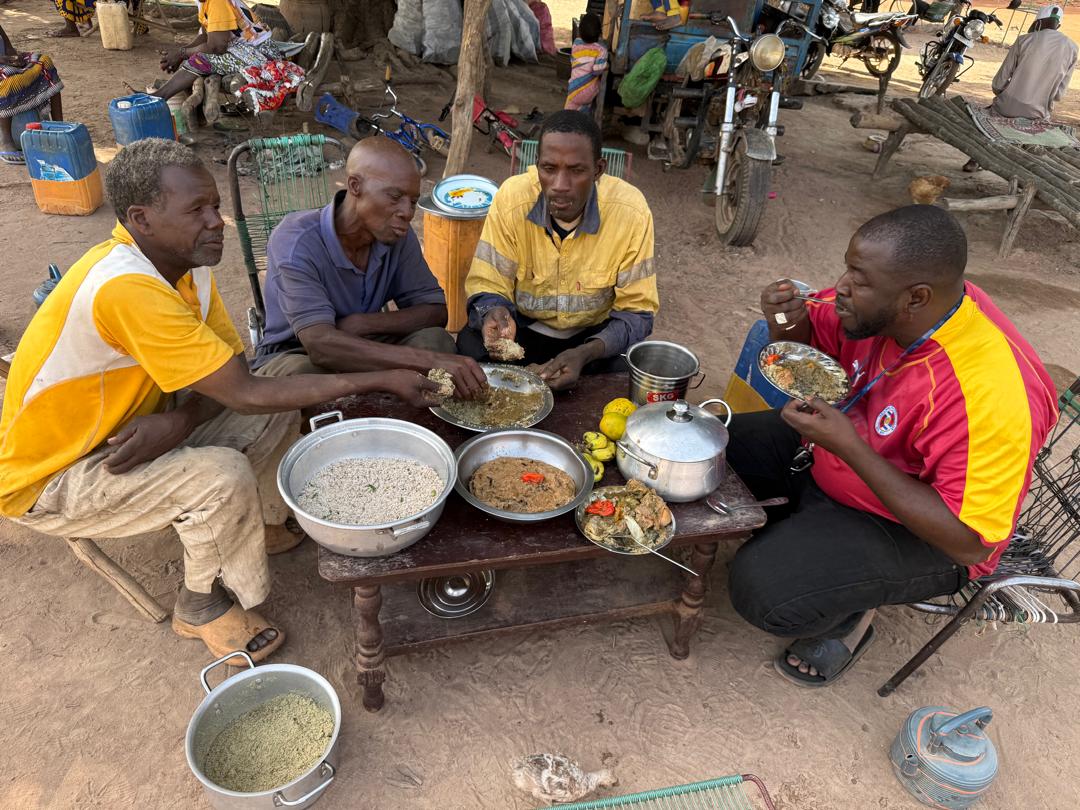
Food tasting by participants, featuring the prepared dishes from the training sessions.
Tailoring Nutrition for the Most Vulnerable: The Revival of Laro
The demonstration highlighted how traditional dishes can be adapted to meet specific dietary needs within the household. Among these, sorghum Laro—a light, easily digestible porridge—has long been used to support the nutritional needs of elderly people, pregnant women, and individuals recovering from illness.
Unlike Djouka, a savory, energy-dense steamed sorghum dish traditionally blended with groundnut powder and consumed by the whole family, Laro is specifically valued for its softness and digestibility, making it particularly suitable for vulnerable groups. The session introduced improved preparation techniques to enhance hygiene, improve the food’s texture and nutritional value, and preserve its cultural identity.
Women caregivers actively participated and shared their experiences. One participant explained: “For my elderly mother, heavy foods are difficult to digest. With this improved Laro, I can prepare something clean, light, and nourishing.”
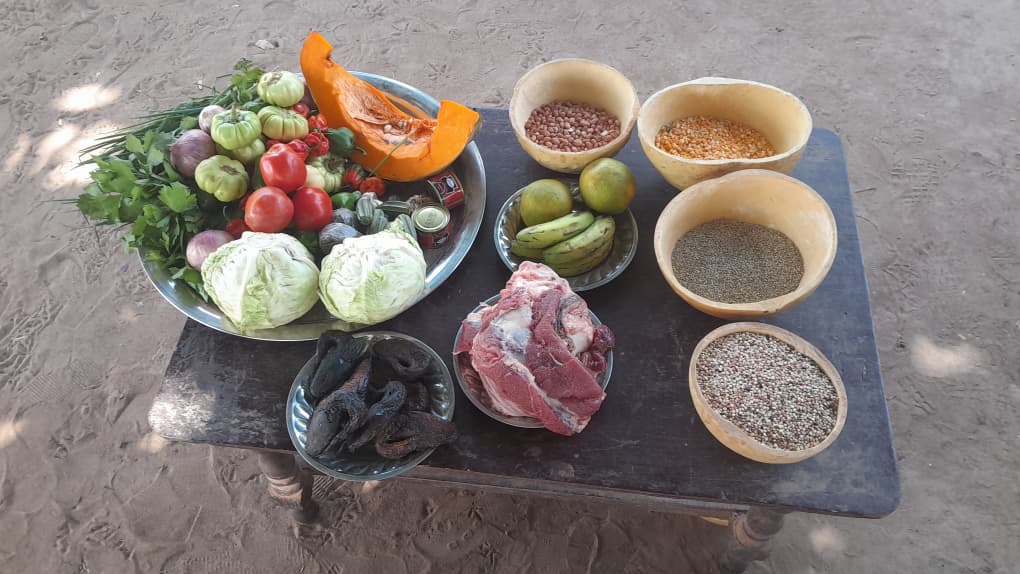
Practical demonstration in Tiola showcasing the preparation of local nutritious foods such as Laro and Djouka using locally produce.
Enriching Everyday Meals with Local Ingredients
Participants learned how locally available ingredients such as milk, groundnuts, legumes, fish, and vegetables can significantly increase the protein and micronutrient content of their meals. By incorporating these ingredients, families can create more balanced diets that combine energy-giving, body-building, and protective foods without altering the traditional character of the dishes.
The training resonated with many participants. One female participant shared: “I prepare Djouka almost every week. Today I learned how to enrich it with vegetables and ground nuts. I can already see how this will help my children eat better without changing what we usually cook.”
Beyond cooking techniques, a strong emphasis was placed on food safety practices. Participants were trained in strict household hygiene practices, including the use of clean water, proper storage of sorghum flour, and same-day preparation, to protect vulnerable consumers.
Empowering Women and Boosting Local Economies
The demonstration did more than improve household nutrition education; it also highlighted emerging business opportunities. Recognizing the growing demand for nutritious and culturally accepted foods in both urban and rural markets, several participants expressed strong interest in preparing and marketing these improved sorghum products. Such emerging business opportunities have the potential to increase household incomes while promoting healthier diets across the broader community.
Ultimately, the initiative reinforced the vital role women play in promoting household food security and nutrition. Many caregivers reported greater confidence in preparing meals that better meet the nutritional needs of children, pregnant women, and elderly family members, while relying less on costly processed foods.
By beautifully blending cultural heritage with improved nutritional practices, this initiative demonstrates how local foods like sorghum Laro and Djouka can contribute to healthier households, empower women economically, and foster more resilient local food systems in Tiola.
SAA Publications
E-newsletter
"Walking with the Farmer"
SAA publishes a bimonthly e-newsletter reporting on SAA activities.
SAA Mail News
Sign up to receive our e-newsletter and upcoming event information via email.

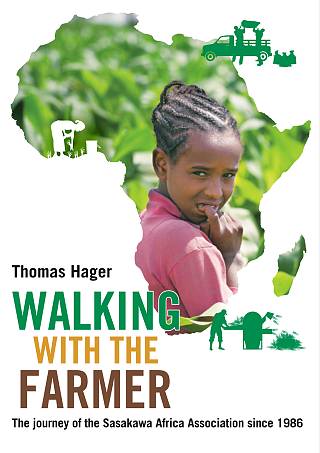
SAA history book
"Walking with the Farmer: The journey of the Sasakawa Africa Assoication since 1986"
This book chronicles the history of SAA from its inception to the present.
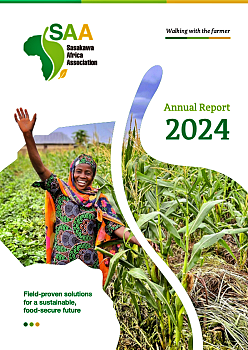
Annual Report
Annual Report FY2024
Annual Report FY2024 is available here.


